Tap or Distilled Water in an Ultrasonic Cleaner?
By John Morris · Published September 11, 2026 · Research-based guidance
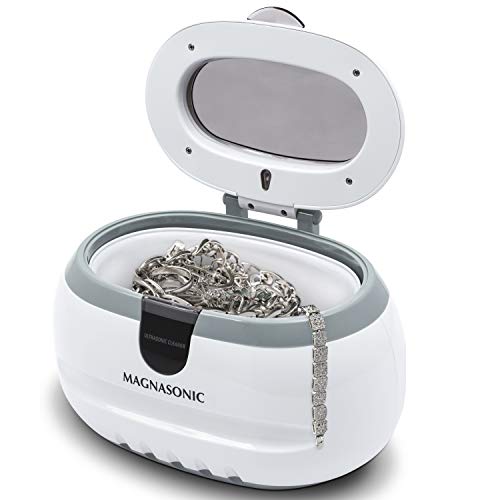
You do not always need distilled water. Magnasonic specifies ordinary tap water for general cleaning in the CD2800. For another machine, start with its manual and the cleaning liquid's directions, then consider whether mineral residue is causing a separate problem during rinsing or drying.
When tap water is the documented choice
The CD2800 example establishes that a household ultrasonic cleaner can be designed for tap water. Follow your own model's instructions, including any water requirement stated by the detergent manufacturer. A specialized process may have different requirements.
If the instructions specifically name distilled or deionized water, do not silently substitute another supply. Ask the supplier whether the requirement applies to the cleaning bath, the rinse, or both.
Look at when the mark appears
USGS identifies dissolved calcium and magnesium as the main contributors to water hardness. Minerals can contribute to deposits and drying marks, but hardness varies locally; a national map cannot diagnose the water at your sink.
Observe the item before and after drying. Remaining soil while it is still wet suggests a different question from a film that appears only as the surface dries. Neither observation alone proves a machine fault. A lower-mineral rinse may be worth discussing with the manufacturer for a residue-sensitive item.
Water choice does not replace cleaning chemistry
CREWORKS notes that tap water can support cavitation while having limits against grease and stubborn contamination. Switching to distilled water does not select a detergent capable of removing a particular oil.
Use the permitted cleaning formulation for the residue. If the item is clean before drying but develops spots, investigate the rinse and drying instructions before increasing detergent. Changing those variables separately makes the result easier to interpret.
A practical decision
Continue with tap water when the instructions allow it and the required result is achieved. If repeatable mineral residue remains, seek a suitable lower-mineral bath or rinse recommendation. Buy water for that identified need rather than assuming an expensive supply improves every cleaning job.
When should the water be drained?
Use the maintenance schedule for the actual machine. The CD2800 manual instructs owners to empty the tank after cleaning rather than leave water in it. Elma's Easy R manual gives a different operating context: replace visibly dirty fluid and at least daily. Neither instruction supports keeping an unidentified dirty bath indefinitely. Disconnect and empty the unit using its documented method; dispose of the liquid according to the cleaning product and removed contamination.
Check usable basket space · Compare cleaner specifications