Ultrasonic Cleaning Time and Temperature: Set the Right Limits
By John Morris · Published September 11, 2026 · Updated · Research-based guidance
There is no single time and temperature setting that applies to every ultrasonic-cleaning job. Start with the permitted process for the object and liquid, then check whether the exact machine can follow it. A timer tells you how long an operation can run; it does not establish how much exposure an object can tolerate.
| Record before starting | Where to obtain it | Why it matters |
|---|---|---|
| Permitted exposure and bath temperature | Object or service guidance plus cleaning-liquid instructions | The machine's maximum setting is not the object's limit |
| Starting temperature and measurement method | Exact machine manual and process instructions | A heater setting alone does not show that the bath is ready |
| Cycle count and total active time | Your actual session record | Repeated cycles add exposure |
| Cooling or duty-cycle requirement | Exact machine manual | Automatic shutdown does not establish continuous-use approval |
A three-minute button is a control, not a cleaning prescription
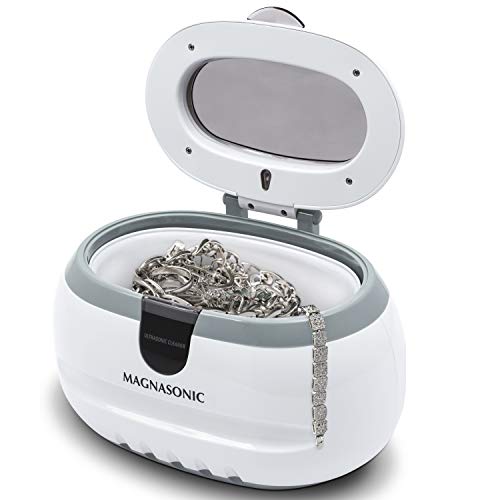
Magnasonic's CD2800 has one 180-second preset. The MGUC500 offers 90, 180, 280, 380 and 480 seconds. Those are documented machine choices, not different levels of approval for a stone, coating or assembled object.
Running a three-minute cycle twice creates six minutes of active ultrasonic exposure. The automatic stop between runs does not erase the first cycle.
How long should I leave my glasses in an ultrasonic cleaner?
The MGUC500 manual restricts ultrasonic eyeglass cleaning to frames. Its presets therefore do not provide a permitted duration for a complete pair with lenses installed. Our glasses guide explains the separate lens, coating and frame checks.
Should an ultrasonic cleaner get hot?
The bath can warm during normal operation, but unexpected excessive heat needs attention. Elma's Easy R manual states that ultrasound itself heats the liquid and calls for temperature checks, particularly with sensitive objects. A heater-off setting therefore does not prove that repeated cycles stay at the starting temperature. Stop and follow the exact model's instructions if it overheats or reports a temperature fault.
Keep the requested setting, any displayed measurement and the actual permitted process distinct. An ambient operating-temperature specification describes the room conditions for the appliance; it is not a target cleaning temperature. Likewise, an overtemperature cutoff is a protective limit, not a recommended setting for a delicate object.
How long does an ultrasonic cleaner take to heat up?
There is no supported universal warm-up time in the sources reviewed here. Find the manufacturer's expectation for the exact model, fill and target setting; do not borrow a time from a different tank. A heater wattage alone does not establish the warm-up duration. Where the procedure requires a particular starting temperature, establish that condition using the machine's documented measurement method before beginning the timed cleaning stage.
Check usable basket space · Compare cleaner specifications